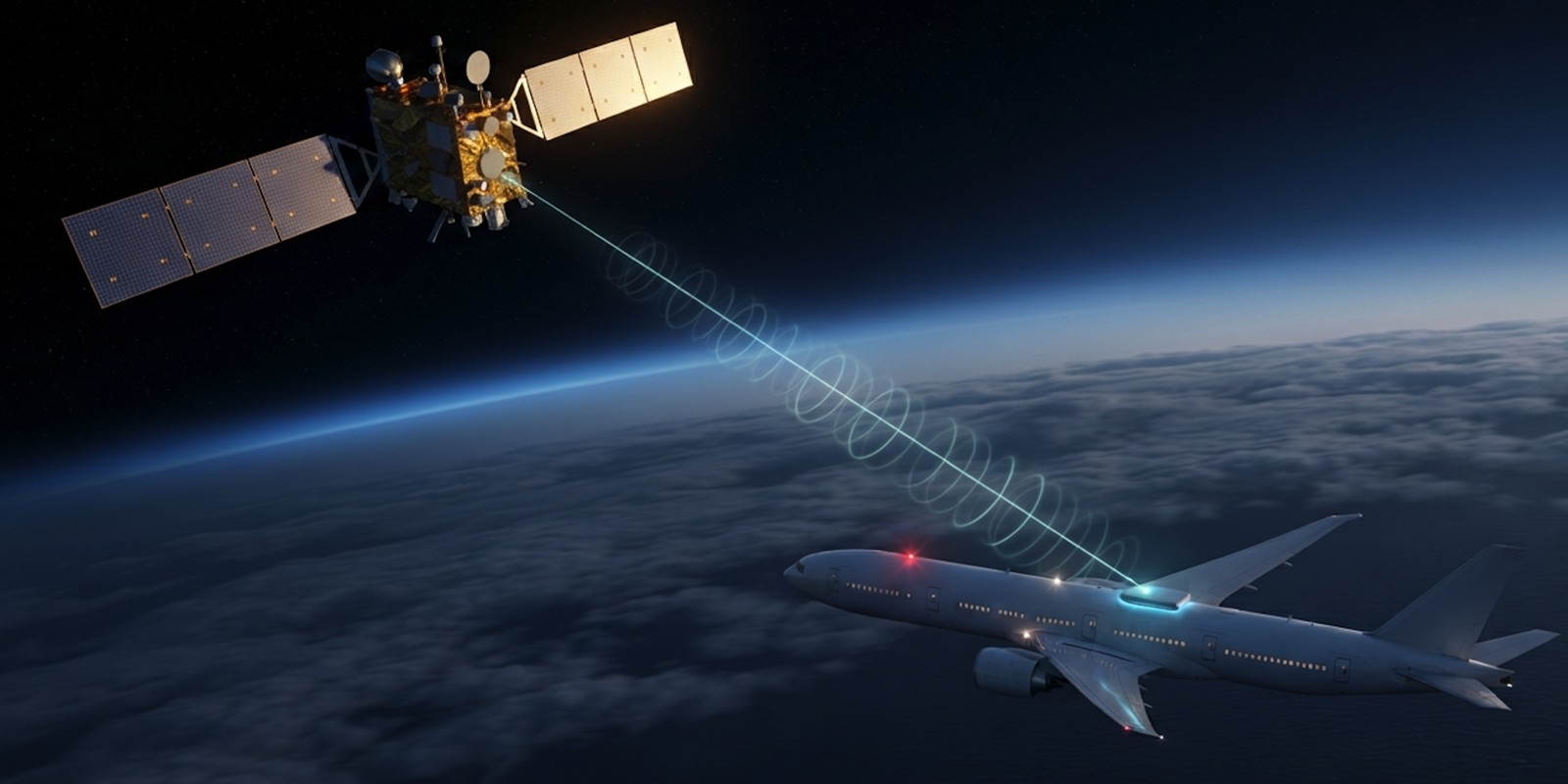
Anatomy of Modern Aviation Satellite Communications
Satellite communication (SATCOM) forms the backbone of modern long-range and oceanic aircraft connectivity. As traditional VHF (Very High Frequency) line-of-sight voice and data links become insufficient for global operations, commercial aviation relies heavily on satellite constellations operating across multiple orbits and radio frequency bands. Understanding the underlying physics and network topologies of these space-based links is the fundamental starting point for any aviation cybersecurity specialist, Continuing Airworthiness Management Organisation (CAMO), or avionics engineer tasked with securing the modern flight deck.
In contemporary commercial aviation operations, maintaining continuous, reliable connectivity across remote oceanic tracks, polar regions, and dense continental airspace requires a sophisticated synthesis of spaceborne and airborne engineering. The continuous exchange of operational, administrative, and safety-critical traffic over thousands of miles introduces a complex attack surface. Security architects must look beyond simple perimeter defenses, evaluating the end-to-end telemetry pipeline from the satellite transponder down to the avionics bus inside the aircraft.
Orbital Dynamics: GEO vs. LEO and MEO
Historically, commercial aviation SATCOM relied heavily on Geostationary Earth Orbit (GEO) satellites positioned approximately 35,786 kilometers above the equator, though the Iridium Low Earth Orbit (LEO) constellation has also served aviation safety and messaging needs for over two decades. GEO satellites rotate synchronously with the Earth, providing continuous, stationary coverage over vast geographical areas, including major oceanic tracks. However, the immense propagation delay (latency) inherent in GEO systems—typically around 600 milliseconds round-trip—presents significant challenges for real-time interactive applications and modern IP-based protocols.
In contrast, Low Earth Orbit (LEO) and Medium Earth Orbit (MEO) constellations operate at altitudes ranging from a few hundred to several thousand kilometers. These lower orbits drastically reduce round-trip latency to tens of milliseconds and offer significantly higher bandwidth capabilities. Because LEO and MEO satellites move rapidly relative to the Earth's surface, airborne terminals must execute continuous handovers between individual satellites and beam footprints. This dynamic topology introduces complex routing and switching challenges, alongside new attack surfaces related to tracking, beam-switching commands, and handoff authentication procedures. Polar coverage, historically a significant blind spot for equatorial GEO footprints, is inherently solved by polar and inclined LEO constellations, which provide seamless handoffs and consistent link availability to aircraft operating on northern and southern transpolar routes.
Frequency Bands: L-band versus Ku-band and Ka-band
Aviation SATCOM spectrum allocation is broadly split into two distinct operational categories: L-band safety services and high-throughput Ku/Ka-band broadband services.
- L-band (1 to 2 GHz): Traditionally utilized for safety-of-flight communications, including ACARS (Aircraft Communications Addressing and Reporting System), FANS (Future Air Navigation System) data links, and safety voice. L-band signals possess exceptional link margin, high resistance to rain fade and weather attenuation, and reliable performance across extreme polar latitudes. Providers such as Inmarsat (SwiftBroadband-Safety) and Iridium (Certus) anchor their safety and foundational tracking services in this spectrum.
- Ku-band (roughly 10.7 to 14.5 GHz for satellite services) and Ka-band (roughly 18 to 31 GHz for satellite services): Operating at much higher frequencies, these bands deliver high-throughput satellite (HTS) connectivity capable of supporting passenger In-Flight Connectivity (IFC), crew operational applications, and large data transfers (such as heavy software load uploads and engine health monitoring downloads). While offering vastly superior bandwidth, Ku- and Ka-band links are susceptible to atmospheric attenuation (rain fade) and require highly directional, mechanically or electronically steered antennas.
Airborne SATCOM Architecture and Network Domains
The integration of SATCOM into the aircraft avionics suite involves a complex chain of hardware components. At the physical layer, an aircraft is equipped with either a low-gain omnidirectional antenna (predominantly for L-band safety terminals) or a high-gain directional antenna housed within a fuselage-mounted radome (for Ku/Ka-band IFC). These antennas interface with radio frequency (RF) transceiver units and high-power amplifiers (HPAs), which in turn connect to satellite data units (SDUs) or modem processors inside the avionics bay.
From an internal wiring and data routing perspective, the SDU or modem acts as the primary bridge between the RF space segment and the aircraft internal ethernet networks. The SDU interfaces directly with the aircraft communications router (ACR) or Communication Management Unit (CMU), which coordinates data streams between VHF, SATCOM, and HF physical layers. Concurrently, network server units (NSUs) or cabin network routers manage the distribution of broadband traffic to passenger and crew cabin access points. The physical interconnection relies on ARINC 429 buses, avionic Ethernet (such as AFDX or ARINC 664), and serial links, creating an intricate web where physical proximity and logical routing must be strictly governed.
From a network architecture perspective, modern aircraft adhere strictly to the principle of domain segregation, as formalized by frameworks such as ARINC 811. The aircraft network is partitioned into distinct domains to ensure that non-essential data flows cannot compromise flight-critical systems:
- Aircraft Control Domain (ACD): Encompasses fly-by-wire, engine controls, and primary flight instrumentation. It has absolute priority and is strictly segregated from external networks.
- Airline Information Services Domain (AISD): Handles operational administrative communications, maintenance data, and air traffic services (ATS) messaging via ACARS and FANS.
- Passenger Information and Entertainment Services Domain (PIESD): Houses passenger Wi-Fi, IFE servers, and personal electronic device (PED) connectivity.
SATCOM terminals often bridge these domains, acting as a gateway between the ground infrastructure and the airborne network. Without rigorous enforcement of logical and physical barriers—such as firewalls, routers, and data diodes—a compromise originating in the passenger-facing PIESD could theoretically propagate into the AISD or interact with avionics buses.
Safety-Critical Data Links Carried Over SATCOM
Satellite links are not merely conduits for passenger internet access; they are the primary digital highways for Air Traffic Management (ATM) in airspace devoid of VHF ground station coverage. Over oceanic and remote continental routes, safety-of-flight data links rely entirely on SATCOM.
ACARS, FANS, CPDLC, and ADS-C
- ACARS: Originally a VHF messaging protocol, ACARS traffic is routinely routed over satellite data links (such as Inmarsat Classic Aero or SwiftBroadband) to transmit flight progress reports, out-off-on-in (OOOI) times, weather requests, and airline operational control (AOC) messages.
- FANS 1/A: An avionics system that introduces Controller-Pilot Data Link Communications (CPDLC) and Automatic Dependent Surveillance-Contract (ADS-C). FANS 1/A allows air traffic controllers to issue digital clearances (e.g., altitude and route changes) directly to the flight deck, and commands aircraft avionics to automatically downlink precise GPS-derived position, velocity, and meteorological data.
Because these messages dictate aircraft separation and routing in dense oceanic corridors, the integrity and authenticity of SATCOM data links are paramount. Historically, many foundational aviation data links were designed decades ago with a focus on reliability rather than confidentiality or cryptographic authentication. Consequently, messages traversing unencrypted satellite channels are theoretically vulnerable to interception, manipulation, or replay if proper upper-layer security wrappers are absent.
The Aviation SATCOM Threat Landscape
The convergence of commercial aviation networks with IP-based satellite architectures exposes aircraft to sophisticated cyber threats. Threat actors ranging from nation-state advanced persistent threats (APTs) to opportunistic cybercriminals recognize that compromising the satellite link or ground infrastructure can yield unauthorized access to aviation networks.
Jamming and RF Interference
Because satellite signals travel thousands of miles with very low power density upon reaching the Earth's surface, airborne terminals are inherently susceptible to intentional radio frequency jamming. Both L-band safety links and Ku/Ka-band broadband links can be disrupted by terrestrial or airborne interference sources. While jamming primarily causes a denial of service (DoS) rather than a direct data breach, losing primary ATS data links over remote oceans forces flight crews back onto fallback procedures, increasing crew workload and operational risk.
Spoofing and Eavesdropping
Unencrypted satellite channels allow for passive eavesdropping. Traffic traversing older L-band protocols or unencrypted broadband links can be captured by sophisticated ground-based receivers. More critically, RF spoofing involves transmitting forged satellite beacon or control signals to deceive airborne terminals regarding timing, frequency, or network identity, potentially causing loss of synchronization or forcing terminals onto malicious ground stations.
Terminal Firmware and Management Vulnerabilities
Airborne SATCOM modems, routers, and antenna control units run complex embedded operating systems. These devices often feature maintenance Ethernet ports, Wi-Fi configuration interfaces, or remote management routines. Vulnerabilities in terminal firmware, unpatched web servers, default administrative credentials, or insecure update mechanisms provide a direct entry point for attackers with physical access (during maintenance) or logical access (via misconfigured internal networks).
Ground-Segment and Supply-Chain Risks
The airborne terminal is only one node in an extensive SATCOM ecosystem. Ground earth stations (GES), teleports, satellite network operations centers (NOCs), and third-party Internet Service Provider (ISP) networks form a massive attack surface. Furthermore, the aviation supply chain involves numerous avionics manufacturers, software vendors, and maintenance subcontractors. A compromise of firmware update servers or supply chain components can result in trojanized software being loaded onto aircraft SATCOM routers during scheduled maintenance checks.
Failure Modes and Crew Fallback Procedures
When a SATCOM link fails due to cyber interference, hardware faults, or jamming, the aircraft experiences an immediate degradation in operational capability. In oceanic airspace where VHF coverage is absent, the loss of CPDLC and ADS-C forces the flight crew to revert to High Frequency (HF) voice communications with air traffic control. HF voice is subject to atmospheric static, propagation anomalies, and congestion. Furthermore, standard operating procedures dictate that the crew must transition to procedural separation, increasing longitudinal and lateral separation minima between aircraft. This fallback procedure directly impacts airspace capacity, elevates flight deck workload, and requires strict adherence to contingency flight plans.
Regulatory and Standards Framework
Recognizing the escalating cyber risk to connected aircraft, aviation regulatory bodies and standardization organizations have established comprehensive frameworks that mandate stringent cybersecurity engineering and airworthiness compliance.
| Standard / Regulation |
Scope / Applicability |
Core Objective |
| EASA Part-IS (EU 2022/1645 & 2023/203) |
Design and production organisations, aerodromes, air operators, maintenance and continuing airworthiness organisations, training organisations, air navigation service providers and competent authorities |
Mandates the management of information security risks with potential impact on aviation safety. |
| ED-202A / DO-326A |
Aircraft certification and airworthiness engineering |
Defines the airworthiness security process for assessing and mitigating security risks across the aircraft lifecycle. |
| ED-203A / DO-356A |
Methodology for security assessments and severity evaluation |
Provides guidance on security event severity, threat assessment, and architectural hardening verification. |
| ARINC 781 / ARINC 791 |
Avionics equipment standards (SATCOM and antenna systems) |
Standardizes physical, electrical, and logical interfaces for airborne broadband and satellite communications hardware. |
Compliance with these standards requires regulated entities to integrate cybersecurity risk assessments directly into their Safety Management Systems (SMS) and Continuing Airworthiness Management processes. Under Part-IS risk management and airworthiness security processes, maintaining robust firmware baselines, performing rigorous vulnerability assessments, and executing configuration audits are established as expected good practice and serve as primary focus areas during regulatory compliance audits.
Practical Mitigations for Operators, CAMOs, and Maintenance
Securing aircraft SATCOM implementations requires a defense-in-depth strategy spanning physical maintenance, logical network architecture, and continuous monitoring.
Domain Segregation and Data Diodes
The most critical architectural mitigation is absolute domain segregation. Airlines must ensure that physical and logical boundaries between the Passenger Information and Entertainment Services Domain (PIESD) and the Airline Information Services Domain (AISD) are impenetrable. Implementing hardware-enforced data diodes ensures that data can flow unidirectionally from operational networks to passenger systems (or vice versa, depending on design), preventing any lateral movement from compromised passenger Wi-Fi networks into operational ACARS or flight management systems.
Encryption and Authentication
Operators should mandate the use of end-to-end encryption for all data traversing SATCOM links where supported by the service provider and avionics architecture. Virtual Private Networks (VPNs), Transport Layer Security (TLS) with strong cipher suites, and cryptographic authentication mechanisms for management interfaces prevent eavesdropping and protect against man-in-the-middle (MitM) attacks.
Configuration and Patch Management
CAMOs and maintenance organizations must maintain an exhaustive configuration baseline of all SATCOM hardware and software versions installed across the fleet. Vulnerability patches for satellite modems, routers, and antenna controllers must be evaluated, tested in simulated lab environments, and deployed systematically during scheduled maintenance checks. Default passwords must be systematically disabled, and administrative access to SATCOM management ports must be strictly controlled and audited.
Supplier Requirements and Incident Response
Airlines must enforce rigorous cybersecurity requirements in contracts with SATCOM service providers, equipment manufacturers, and maintenance contractors. Service Level Agreements (SLAs) should include mandatory security incident reporting timelines, vulnerability disclosure procedures, and audit rights. Furthermore, airlines must develop and test incident response plans specifically tailored to aviation cyber events, detailing procedures for isolating compromised SATCOM links in flight without endangering flight safety.
Worked Example: Multi-Layered Threat Mitigation
Consider a scenario where an external threat actor attempts to exploit an unpatched vulnerability in an airborne SATCOM modem's web management interface via a compromised passenger cabin network. In an unsecured architecture, this vector could allow the attacker to gain administrative control over the modem. However, a properly implemented layered security model stops the attack at multiple defensive tiers:
- Physical/Logical Segregation: ARINC 811 network boundaries and hardware routers block IP packets attempting to traverse from the PIESD (passenger network) into the AISD (operational network) where the SDU management interface resides.
- Interface Hardening: Maintenance web servers and configuration interfaces on the SDU are disabled during flight and only accessible via physical maintenance pins in the avionics bay under strict key-control procedures.
- Authentication and Integrity Checks: Firmware validation routines prevent the installation of unauthorized binaries during software loading procedures, verifying cryptographic checksums before execution.
- Behavioral Monitoring: Network intrusion detection systems monitor internal data buses for anomalous traffic patterns, alerting the flight crew or ground engineering teams to unauthorized probing attempts.
Practical Checklist for CAMOs and Maintenance Organisations
To ensure operational airworthiness and compliance with EASA Part-IS and associated security standards, Continuing Airworthiness Management Organisations (CAMOs) and maintenance facilities should execute the following operational checklist:
- Verify that all SATCOM hardware part numbers and software versions match the approved Type Design Configuration baseline.
- Confirm that physical access ports (Ethernet, serial, and maintenance jacks) on SDUs and routers are secured with tamper-evident seals and verified during heavy maintenance checks.
- Audit administrative privilege lists to ensure only authorized engineering personnel hold credentials for modem configuration interfaces.
- Review Service Level Agreements (SLAs) with satellite communication providers to ensure timely notification of zero-day vulnerabilities and mandatory patch releases.
- Ensure line maintenance technicians follow validated secure media transfer procedures when uploading database updates or software loads via portable maintenance terminals.
Starlink in Aviation: Architecture, Adoption and Security
Architecture and Connectivity Profile
SpaceX's Starlink service relies on a Low Earth Orbit (LEO) satellite constellation, offering significantly lower latency compared to traditional Geostationary Earth Orbit (GEO) providers. The architecture utilizes inter-satellite laser links for data transit between spacecraft and ground gateways connecting to the terrestrial internet. The aviation variant uses an electronically steered phased-array antenna, typically mounted on the aircraft fuselage, operating across Ku- and Ka-frequency bands. Currently, Starlink serves primarily as a high-throughput pipe for passenger and crew internet connectivity. It is not generally certified as a safety-services link for Air Traffic Services (ATS) data link communications, which continue to rely on traditional, highly regulated channels.
Public Adoption in Commercial and Business Aviation
Several commercial carriers and operators have announced the adoption of Starlink for in-flight connectivity, introducing high-speed internet to their fleets. Commercial airlines that have publicly announced Starlink adoption include airBaltic, Air France, Hawaiian Airlines, Qatar Airways, United Airlines, WestJet, and ZIPAIR. In addition, regional and business aviation operators such as JSX have integrated the service. These deployments reflect a growing demand for broadband-tier connectivity in the cabin, prompting airlines to rethink their passenger network strategies.
Cybersecurity Considerations and Operator Responsibilities
Publicly documented security measures for Starlink include end-user traffic encryption, cryptographically signed firmware updates, and participation in a public bug bounty programme to identify vulnerabilities. However, independent security research, such as fault-injection attacks demonstrated against Starlink user terminals at Black Hat 2022, highlights the physical attack surface of the hardware itself. Because the physical terminal is installed on the aircraft exterior and interfaces with internal cabin networks, aviation operators cannot rely solely on the provider's security controls.
Airlines must assume ownership of foundational network defense principles:
- Strict domain segregation between Passenger Information and Entertainment Services (PIESD) and Airline Information Services Domain (AISD) or Aircraft Control Domain (ACD).
- Treating the Starlink connection as an untrusted transport medium.
- Mandating Virtual Private Networks (VPNs) and Transport Layer Security (TLS) for any crew or operational traffic traversing the link.
- Establishing robust supplier contracts with clear incident notification requirements.
- Maintaining strict configuration control over the aero terminal hardware and performing comprehensive Part-IS risk assessments before integration.
The Future: LEO Constellations and IP-Based Safety Communications
As the aviation industry looks toward the next generation of satellite communications, the transition toward multi-orbit connectivity and IP-based safety architectures is accelerating. Emerging LEO satellite constellations offer massive global bandwidth, low latency, and resilient mesh-networking capabilities that promise to transform both passenger IFC and operational data links.
Concurrently, standardization bodies and civil aviation authorities are actively developing the Aeronautical Telecommunication Network / Internet Protocol Suite (ATN/IPS). ATN/IPS will progressively complement and replace legacy ATN/OSI and ACARS-based ATS data link over time, introducing modern, robust IP-based protocols designed to support safety-of-flight messaging with native cryptographic security wrappers, including mutual authentication and end-to-end encryption.
While these advancements will greatly enhance operational efficiency and situational awareness, they also introduce new cybersecurity engineering challenges. Managing cryptographic key distribution across globally distributed fleets, securing rapid LEO beam handovers against spoofing, and maintaining strict domain segregation in high-bandwidth connected cockpits will remain central responsibilities for aviation cybersecurity specialists and avionics engineers for decades to come.
Anatomie der modernen Satellitenkommunikation in der Luftfahrt
Die Satellitenkommunikation (SATCOM) bildet das Rückgrat der modernen Konnektivität für Langstrecken- und Ozeanflüge. Da herkömmliche UKW-Sichtverbindungen (VHF) für Sprache und Daten für den globalen Flugbetrieb nicht mehr ausreichen, stützt sich die kommerzielle Luftfahrt stark auf Satellitenkonstellationen, die in verschiedenen Orbits und Funkfrequenzbändern operieren. Das Verständnis der zugrundeliegenden Physik und Netzwerktopologien dieser weltraumgestützten Verbindungen ist der fundamentale Ausgangspunkt für jeden Cyberspezialisten in der Luftfahrt, jede Organisation zur Überwachung der Lufttüchtigkeit (CAMO) und jeden Avionik-Ingenieur, der mit der Absicherung des modernen Cockpits betraut ist.
Im heutigen kommerziellen Flugbetrieb erfordert die Aufrechterhaltung einer kontinuierlichen, zuverlässigen Verbindung über entlegene Ozeangebiete, Polarregionen und dichten Kontinentalen Luftraum eine anspruchsvolle Synthese aus Raumfahrt- und Bord-Engineering. Der kontinuierliche Austausch von Betriebs-, Verwaltungs- und sicherheitskritischem Datenverkehr über Tausende von Meilen hinweg schafft eine komplexe Angriffsfläche. Sicherheitsarchitekten müssen über einfache Perimetersicherheitsmaßnahmen hinausblicken und die End-to-End-Telemetriepipeline vom Satellitentransponder bis zum Avionik-Bus im Flugzeug bewerten.
Orbitdynamik: GEO im Vergleich zu LEO und MEO
Historisch stützte sich die kommerzielle Luftfahrt-SATCOM stark auf geostationäre Satelliten (GEO), die sich etwa 35.786 Kilometer über dem Äquator befinden, obwohl auch die Iridium-Konstellation in einer erdnahen Umlaufbahn (LEO) seit über zwei Jahrzehnten Sicherheits- und Nachrichtendienste für die Luftfahrt bereitstellt. GEO-Satelliten rotieren synchron zur Erde und bieten eine kontinuierliche, stationäre Abdeckung großer geografischer Gebiete, einschließlich wichtiger Ozeanrouten. Die enorme Signallaufzeit (Latenz), die GEO-Systeme von Natur aus mit sich bringen – typischerweise rund 600 Millisekunden für den Hin- und Rückweg –, stellt jedoch eine erhebliche Herausforderung für interaktive Echtzeitanwendungen und moderne IP-basierte Protokolle dar.
Im Gegensatz dazu operieren Konstellationen in niedrigen (LEO) und mittleren (MEO) Erdumlaufbahnen in Höhen von einigen Hundert bis zu mehreren Tausend Kilometern. Diese niedrigeren Orbits reduzieren die Umlaufverzögerung drastisch auf wenige Dutzend Millisekunden und bieten deutlich höhere Bandbreitenfähigkeiten. Da LEO- und MEO-Satelliten sich relativ zur Erdoberfläche schnell bewegen, müssen Bordterminals kontinuierliche Übergaben (Handovers) zwischen einzelnen Satelliten und Ausleuchtungszonen (Beam Footprints) durchführen. Diese dynamische Topologie bringt komplexe Routing- und Vermittlungsprobleme mit sich sowie neue Angriffsfeinde in Bezug auf Tracking, Beam-Switching-Befehle und Handover-Authentifizierungsverfahren. Die Polarabdeckung, historisch ein signifikanter blinder Fleck äquatorialer GEO-Footprints, wird durch polare und geneigte LEO-Konstellationen inhärent gelöst, die nahtlose Handovers und eine konsistente Link-Verfügbarkeit für Flugzeuge auf nördlichen und südlichen transpolaren Routen ermöglichen.
Frequenzbänder: L-Band im Vergleich zu Ku-Band und Ka-Band
Die Frequenzspektrenzuteilung für die Luftfahrt-SATCOM ist grob in zwei verschiedene Betriebskategorien unterteilt: L-Band-Sicherheitsdienste und Ku-/Ka-Band-Breitbanddienste mit hohem Datendurchsatz (HTS).
- L-Band (1 bis 2 GHz): Tradionell für die Flugsicherheitskommunikation verwendet, einschließlich ACARS (Aircraft Communications Addressing and Reporting System), FANS-Datenlinks (Future Air Navigation System) und Sprachkommunikation für die Sicherheit. L-Band-Signale verfügen über eine außergewöhnliche Link-Margin, hohe Resistenz gegen Regenverlust (Rain Fade) und Wetterdämpfung sowie eine zuverlässige Leistung über extreme polare Breitengrade hinweg. Anbieter wie Inmarsat (SwiftBroadband-Safety) und Iridium (Certus) verankern ihre Sicherheits- und grundlegenden Tracking-Dienste in diesem Spektrum.
- Ku-Band (ca. 10,7 bis 14,5 GHz für Satellitendienste) und Ka-Band (ca. 18 bis 31 GHz für Satellitendienste): Diese bei viel höheren Frequenzen operierenden Bänder bieten eine High-Throughput-Satellitenkonnektivität (HTS), die Passagier-WLAN (In-Flight Connectivity, IFC), betriebliche Crew-Anwendungen und große Datenübertragungen (wie schwere Software-Load-Uploads und Downloads zur Triebwerksüberwachung) unterstützen kann. Obwohl sie eine weitaus überlegenere Bandbreite bieten, sind Ku- und Ka-Band-Links anfällig für atmosphärische Dämpfung (Regenverlust) und erfordern stark direktionale, mechanisch oder elektronisch nachgeführte Antennen.
Bordgestützte SATCOM-Architektur und Netzwerkdomänen
Die Integration von SATCOM in die Avionik-Suite des Luftfahrzeugs umfasst eine komplexe Kette von Hardwarekomponenten. Auf der Bitübertragungsschicht (Physical Layer) ist ein Flugzeug entweder mit einer Rundstrahlantenne mit geringer Antennenverstärkung (vorwiegend für L-Band-Sicherheitsterminals) oder einer direktionalen Antenne mit hoher Verstärkung in einer rumpfmontierten Verkleidung (Radom) für Ku-/Ka-Band-IFC ausgestattet. Diese Antennen sind an Hochfrequenz-Transceivereinheiten (RF) und Leistungsverstärker (High-Power Amplifiers, HPAs) angeschlossen, die wiederum mit Satellitendateneinheiten (SDUs) oder Modemprozessoren im Avionikschacht verbunden sind.
Aus Sicht der internen Verkabelung und des Daten-Routings fungiert die SDU oder das Modem als primäre Brücke zwischen dem HF-Weltraumsegment und den internen Ethernet-Netzwerken des Flugzeugs. Die SDU kommuniziert direkt mit dem Flugkommunikationsrouter (Aircraft Communications Router, ACR) oder der Kommunikationsverwaltungseinheit (Communication Management Unit, CMU), die Datenströme zwischen den physischen VHF-, SATCOM- und HF-Schichten koordiniert. Gleichzeitig verwalten Netzwerkservereinheiten (NSUs) oder Kabin Netzwerkrouter die Verteilung des Breitbandverkehrs an Passagier- und Crew-Kabinenzugangspunkte. Die physische Verbindung basiert auf ARINC-429-Bussen, Avionik-Ethernet (wie AFDX oder ARINC 664) und seriellen Verbindungen, wodurch ein komplexes Geflecht entsteht, bei dem physische Nähe und logische Routenführung streng kontrolliert werden müssen.
Aus Sicht der Netzwerkarchitektur halten sich moderne Flugzeuge strikt an das Prinzip der Domänentrennung, wie es durch Frameworks wie ARINC 811 formalisiert ist. Das Flugzeugnetzwerk ist in verschiedene Domänen unterteilt, um sicherzustellen, dass nicht-essenzielle Datenströme flugkritische Systeme nicht beeinträchtigen können:
- Aircraft Control Domain (ACD): Umfasst Fly-by-Wire, Triebwerkssteuerungen und primäre Fluginstrumentierung. Sie hat absolute Priorität und ist streng von externen Netzwerken getrennt.
- Airline Information Services Domain (AISD): Verarbeitet betriebliche administrative Kommunikationen, Wartungsdaten und Flugverkehrsdienste-Meldungen (Air Traffic Services, ATS) über ACARS und FANS.
- Passenger Information and Entertainment Services Domain (PIESD): Beherbergt das Passagier-WLAN, In-Flight-Entertainment-Server (IFE) und die Konnektivität persönlicher elektronischer Geräte (PED).
SATCOM-Terminals überbrücken häufig diese Domänen und fungieren als Gateway zwischen der Bodeninfrastruktur und dem Bordnetzwerk. Ohne die rigorose Durchsetzung logischer und physischer Barrieren – wie Firewalls, Router und Datendioden – könnte sich eine Kompromittierung, die im passagierseitigen PIESD ihren Ursprung hat, theoretisch in das AISD ausbreiten oder mit Avionik-Bussen interagieren.
Sicherheitskritische Datenverbindungen über SATCOM
Satellitenverbindungen sind nicht nur Kanäle für den Passagier-Internetugang; sie sind die primären digitalen Autobahnen für das Flugverkehrsmanagement (ATM) in Lufträumen ohne UKW-Bodenstationsabdeckung. Auf ozeanischen und entlegenen Kontinentalrouten basieren Flugsicherheits-Datenlinks vollständig auf SATCOM.
ACARS, FANS, CPDLC und ADS-C
- ACARS: Ursprünglich ein VHF-Nachrichtenprotokoll, wird der ACARS-Verkehr routinemäßig über Satellitendatenlinks (wie Inmarsat Classic Aero oder SwiftBroadband) geleitet, um Flugfortschrittsberichte, OOOI-Zeiten (Out-Off-On-In), Wetteranfragen und Flugbetriebskontrolldaten (AOC) zu übermitteln.
- FANS 1/A: Ein Avioniksystem, das Controller-Pilot Data Link Communications (CPDLC) und Automatic Dependent Surveillance-Contract (ADS-C) einführt. FANS 1/A ermöglicht es Fluglotsen, digitale Freigaben (z. B. Höhen- und Routenänderungen) direkt an das Flugdeck zu übermitteln und befiehlt der Flugavionik, präzise GPS-abgeleitete Positions-, Geschwindigkeits- und meteorologische Daten automatisch herunterzuladen.
Da diese Nachrichten die Trennung und Routenführung von Flugzeugen in dichten Ozeankorridoren bestimmen, sind Integrität und Authentizität von SATCOM-Datenlinks von größter Bedeutung. Historisch wurden viele grundlegende Luftfahrtdatenlinks vor Jahrzehnten mit Schwerpunkt auf Zuverlässigkeit statt auf Vertraulichkeit oder kryptografische Authentifizierung entwickelt. Folglich sind Nachrichten, die über unverschlüsselte Satellitenkanäle übertragen werden, theoretisch anfällig für Abhörung, Manipulation oder Wiedereinspspielung (Replay-Angriffe), wenn geeignete Sicherheitshüllen der oberen Schichten fehlen.
Die Bedrohungslandschaft der Luftfahrt-SATCOM
Die Konvergenz kommerzieller Luftfahrtnetzwerke mit IP-basierten Satellitenarchitekturen setzt Flugzeuge raffinierten Cyberbedrohungen aus. Bedrohungsakteure, die von Advanced Persistent Threats (APTs) von Nationalstaaten bis hin zu opportunistischen Cyberkriminellen reichen, erkennen, dass eine Kompromittierung der Satellitenverbindung oder der Bodeninfrastruktur unbefugten Zugriff auf Luftfahrtnetzwerke ermöglichen kann.
Jamming und HF-Interferenz
Da Satellitensignale Tausende von Meilen mit sehr geringer Leistungsdichte zurücklegen, wenn sie die Erdoberfläche erreichen, sind Bordterminals von Natur aus anfällig für absichtliches Hochfrequenz-Jamming. Sowohl L-Band-Sicherheitsverbindungen als auch Ku-/Ka-Band-Breitbandverbindungen können durch terrestrische oder luftgestützte Interferenzen gestört werden. Während Jamming in erster Linie zu einer Dienstverweigerung (Denial of Service, DoS) statt zu einer direkten Datenpanne führt, zwingt der Verlust primärer ATS-Datenlinks über entlegenen Ozeanen die Flugbesatzung dazu, auf Rückfallverfahren (Fallback Procedures) auszuweichen, was die Arbeitsbelastung der Besatzung und das Betriebsrisiko erhöht.
Spoofing und Abhören (Eavesdropping)
Unverschlüsselte Satellitenkanäle ermöglichen passives Abhören. Verkehr, der über ältere L-Band-Protokolle oder unverschlüsselte Breitbandlinks läuft, kann von raffinierten Bodenempfängern erfasst werden. Noch kritischer ist RF-Spoofing, bei dem gefälschte Satelliten-Baken- oder Steuersignale übertragen werden, um Bordterminals hinsichtlich Timing, Frequenz oder Netzwerkidentität zu täuschen. Dies kann möglicherweise zum Verlust der Synchronisation führen oder Terminals zwingen, sich mit bösartigen Bodenstationen zu verbinden.
Firmware- und Management-Schwachstellen von Terminals
Bordgestützte SATCOM-Modems, -Router und Antennensteuereinheiten betreiben komplexe eingebettete Betriebssysteme (Embedded OS). Diese Geräte verfügen häufig über Wartungs-Ethernet-Ports, WLAN-Konfigurationsschnittstellen oder Remotemanagement-Routinen. Schwachstellen in der Terminal-Firmware, nicht gepatchte Webserver, Standard-Administratoranmeldeinformationen oder unsichere Aktualisierungsmechanismen bieten Angreifern mit physischem Zugriff (während der Wartung) oder logischem Zugriff (über falsch konfiguriertes internes Netzwerk) einen direkten Eingangspunkt.
Boden- und Lieferkettenrisiken (Supply Chain)
Das Bordterminal ist nur ein Knotenpunkt in einem umfangreichen SATCOM-Ökosystem. Bodenstationen (GES), Teleports, Satelliten-Netzwerkbetriebszentren (NOCs) und Netzwerke von Internetdienstanbietern (ISPs) von Drittanbietern bilden eine massive Angriffsfläche. Darüber hinaus umfasst die Luftfahrtlieferkette zahlreiche Avionikhersteller, Softwareanbieter und Wartungsunternehmer. Die Kompromittierung von Firmware-Update-Servern oder Lieferkettenkomponenten kann dazu führen, dass während planmäßiger Wartungsprüfungen trojanische Software auf SATCOM-Router von Flugzeugen geladen wird.
Fehlermodi und Crew-Rückfallverfahren
Wenn eine SATCOM-Verbindung aufgrund von Cyber-Interferenzen, Hardwarefehlern oder Jamming ausfällt, erfährt das Flugzeug eine sofortige Verschlechterung der betrieblichen Leistungsfähigkeit. Im ozeanischen Luftraum ohne VHF-Abdeckung zwingt der Verlust von CPDLC und ADS-C die Flugbesatzung dazu, auf Hochfrequenz-Schatten-Sprachkommunikation (HF) mit der Flugsicherung zurückzugreifen. HF-Sprache unterliegt atmosphärischem Statik, Ausbreitungsanomalien und Überlastung. Darüber hinaus schreiben Standardarbeitsanweisungen vor, dass die Besatzung auf prozedurabhängige Separation umstellen muss, was die Längs- und Quertrennungsminima zwischen Flugzeugen erhöht. Dieses Rückfallverfahren beeinträchtigt direkt die Luftraumkapazität, erhöht die Arbeitsbelastung im Cockpit und erfordert die strikte Einhaltung von Notfallflugplänen.
Regulierungs- und Normungsrahmen
In Anbetracht der eskalierenden Cyberrisiken für vernetzte Flugzeuge haben Regulierungsbehörden und Normungsorganisationen der Luftfahrt umfassende Rahmenwerke geschaffen, die strenge Cybersicherheitstechnik und die Einhaltung der Lufttüchtigkeit vorschreiben.
| Norm / Verordnung |
Geltungsbereich / Anwendbarkeit |
Kernziel |
| EASA Part-IS (EU 2022/1645 & 2023/203) |
Entwicklungs- und Herstellungsbetriebe, Flugplätze, Luftfahrtunternehmen, Instandhaltungs- und Lufttüchtigkeitsorganisationen, Ausbildungsorganisationen, Flugsicherungsorganisationen und zuständige Behörden |
Schreibt das Management von Informationssicherheitsrisiken mit potenziellen Auswirkungen auf die Flugsicherheit vor. |
| ED-202A / DO-326A |
Flugzeugzertifizierung und Lufttüchtigkeitstechnik |
Definiert den lufttüchtigkeitssicherheitsrelevanten Prozess zur Bewertung und Minderung von Sicherheitsrisiken über den gesamten Lebenszyklus des Flugzeugs hinweg. |
| ED-203A / DO-356A |
Methodik für Sicherheitsbewertungen und Schweregradevaluierung |
Bietet Leitlinien zum Schweregrad von Sicherheitsereignissen, zur Bedrohungsbewertung und zur Verifizierung der Architekturhärtung. |
| ARINC 781 / ARINC 791 |
Avionikgerätestandards (SATCOM und Antennensysteme) |
Standardisiert physische, elektrische und logische Schnittstellen für Hardware zur Breitband- und Satellitenkommunikation im Flugbetrieb. |
Die Einhaltung dieser Standards erfordert von regulierten Unternehmen, Cybersicherheits-Risikobewertungen direkt in ihre Sicherheitsmanagementsysteme (SMS) und die Prozesse des fortlaufenden Lufttüchtigkeitsmanagements zu integrieren. Im Rahmen des Part-IS-Risikomanagements und der Lufttüchtigkeitssicherheitsprozesse sind die Aufrechterhaltung robuster Firmware-Baselines, die Durchführung rigoroser Schwachstellenanalysen und die Ausführung von Konfigurationsaudits als bewährte Verfahren etabliert und dienen als Hauptfokusbereiche bei regulatorischen Konformitätsaudits.
Praktische Gegenmaßnahmen für Betreiber, CAMOs und Wartung
Die Absicherung von SATCOM-Implementierungen im Flugzeug erfordert eine Defense-in-Depth-Strategie, die physische Wartung, logische Netzwerkarchitektur und kontinuierliche Überwachung umfasst.
Domänentrennung und Datendioden
Die kritischste architektonische Schutzmaßnahme ist die absolute Domänentrennung. Fluggesellschaften müssen sicherstellen, dass physische und logische Grenzen zwischen der Passagierinformations- und Unterhaltungsdienstedomäne (PIESD) und der Fluggesellschafts-Informationsdienstedomäne (AISD) undurchdringlich sind. Die Implementierung von durch Hardware erzwungenen Datendioden stellt sicher, dass Daten unidirektional von Betriebsmetzeln zu Passagiersystemen fließen (oder je nach Design umgekehrt), wodurch jede seitliche Bewegung von kompromittierten Passagier-WLAN-Netzwerken in betriebliche ACARS- oder Flugverwaltungssysteme verhindert wird.
Verschlüsselung und Authentifizierung
Betreiber sollten die Verwendung einer End-to-End-Verschlüsselung für alle Daten vorschreiben, die SATCOM-Links durchqueren, sofern dies vom Dienstanbieter und der Avionikarchitektur unterstützt wird. Virtuelle private Netzwerke (VPNs), Transport Layer Security (TLS) mit starken Chiffrensammlungen (Cipher Suites) und kryptografische Authentifizierungsmechanismen für Verwaltungsschnittstellen verhindern das Abhören und schützen vor Man-in-the-Middle-Angriffen (MitM).
Konfigurations- und Patch-Management
CAMOs und Instandhaltungsorganisationen müssen eine umfassende Konfigurations-Baseline aller in der Flotte installierten SATCOM-Hardware- und -Softwareversionen aufrechterhalten. Sicherheitspatches für Satellitenmodems, Router und Antennensteuerungen müssen bewertet, in simulierten Laborumgebungen getestet und während geplanter Wartungsprüfungen systematisch bereitgestellt werden. Standardpasswörter müssen systematisch deaktiviert und der administrative Zugriff auf SATCOM-Verwaltungsports streng kontrolliert und überprüft werden.
Lieferantenanforderungen und Incident Response
Fluggesellschaften müssen strenge Cybersicherheitsanforderungen in Verträgen mit SATCOM-Dienstanbietern, Geräteherstellern und Wartungsunternehmern durchsetzen. Service-Level-Agreements (SLAs) sollten verbindliche Zeitpläne für die Meldung von Sicherheitsvorfällen, Verfahren zur Offenlegung von Schwachstellen und Audit-Rechte umfassen. Darüber hinaus müssen Fluggesellschaften Pläne zur Reaktion auf Vorfälle entwickeln und testen, die speziell auf Cyberereignisse in der Luftfahrt zugeschnitten sind und Verfahren zur Isolierung kompromittierter SATCOM-Verbindungen im Flug beschreiben, ohne die Flugsicherheit zu gefährden.
Praxisbeispiel: Mehrschichtige Bedrohungsabwehr
Betrachten wir ein Szenario, in dem ein externer Angreifer versucht, eine nicht gepatchte Schwachstelle in der Web-Management-Schnittstelle eines SATCOM-Modems an Bord über ein kompromittiertes Passagierkabinennetzwerk auszunutzen. In einer ungesicherten Architektur könnte dieser Vektor es dem Angreifer ermöglichen, die administrative Kontrolle über das Modem zu erlangen. Ein ordnungsgemäß implementiertes, mehrschichtiges Sicherheitsmodell stoppt den Angriff jedoch auf mehreren Verteidigungsebenen:
- Physische/Logische Segrenzung: ARINC-811-Netzwerkgrenzen und Hardware-Router blockieren IP-Pakete, die versuchen, vom PIESD (Passagiernetzwerk) in das AISD (Betriebsnetzwerk) überzugehen, in dem sich die SDU-Verwaltungsschnittstelle befindet.
- Schnittstellenhärtung: Wartungs-Webserver und Konfigurationsschnittstellen auf der SDU werden während des Fluges deaktiviert und sind nur über physische Wartungs-Pins im Avionikschacht unter strengen Schlüsselkontrollverfahren zugänglich.
- Authentifizierungs- und Integritätsprüfungen: Firmware-Validierungsroutinen verhindern die Installation unautorisierter Binärdateien während Software-Ladevorgängen und überprüfen kryptografische Prüfsummen vor der Ausführung.
- Verhaltensüberwachung: Netzwerk-Intrusion-Detection-Systeme überwachen interne Datenbusse auf anomale Verkehrsmuster und alarmieren die Flugbesatzung oder Boden-Engineering-Teams über unbefugte Erkundungsversuche.
Praktische Checkliste für CAMOs und Instandhaltungsorganisationen
Um die Betriebslufttüchtigkeit und die Einhaltung von EASA Part-IS sowie zugehörigen Sicherheitsstandards sicherzustellen, sollten Continuing Airworthiness Management Organisations (CAMOs) und Instandhaltungseinrichtungen folgende betriebliche Checkliste ausführen:
- Überprüfen, ob alle SATCOM-Hardware-Teilenummern und Softwareversionen mit der genehmigten Typdesign-Konfigurations-Baseline übereinstimmen.
- Bestätigen, dass physische Zugangsports (Ethernet-, seriell- und Wartungsbuchsen) an SDUs und Routern mit manipulationssicheren Siegeln (Tamper-Evident Seals) gesichert und bei schweren Wartungsprüfungen überprüft werden.
- Die Listen der Administratorprivilegien überprüfen, um sicherzustellen, dass nur autorisiertes Ingenieurspersonal über Anmeldeinformationen für Modemkonfigurationsschnittstellen verfügt.
- Überprüfen der Service-Level-Agreements (SLAs) mit Satellitenkommunikationsanbietern, um eine rechtzeitige Benachrichtigung über Zero-Day-Schwachstellen und verbindliche Patch-Releases sicherzustellen.
- Sicherstellen, dass Linienwartungstechniker validierte Verfahren zur sicheren Medienübertragung befolgen, wenn sie Datenbank-Updates oder Software-Loads über tragbare Wartungsterminals (Portable Maintenance Terminals) hochladen.
Starlink in der Luftfahrt: Architektur, Einführung und Sicherheit
Architektur und Verbindungsprofil
Der Starlink-Dienst von SpaceX basiert auf einer Konstellation in einer erdnahen Umlaufbahn (LEO) und bietet im Vergleich zu herkömmlichen Anbietern in geostationären Umlaufbahnen (GEO) eine deutlich geringere Latenz. Die Architektur nutzt satellitenübergreifende Laserverbindungen für den Datentransfer zwischen Raumfahrzeugen und Bodenstationen, die eine Verbindung zum terrestrischen Internet herstellen. Die Luftfahrtvariante verwendet eine elektronisch gesteuerte Phased-Array-Antenne, die typischerweise auf dem Flugzeugrumpf montiert ist und in Ku- und Ka-Frequenzbändern arbeitet. Derzeit dient Starlink in erster Linie als hochleistungsfähiger Datenkanal für die Internetkonnektivität von Passagieren und Besatzung. Es ist im Allgemeinen nicht als Sicherheitsdienst-Verbindung für Flugverkehrsdienste-Datenkommunikation (ATS) zertifiziert, die weiterhin auf herkömmliche, streng regulierte Kanäle angewiesen ist.
Öffentliche Einführung in der kommerziellen und Geschäftsaviatik
Mehrere kommerzielle Fluggesellschaften und Betreiber haben die Einführung von Starlink für die Konnektivität an Bord bekannt gegeben und ihren Flotten Hochgeschwindigkeitsinternet zur Verfügung gestellt. Zu den kommerziellen Fluggesellschaften, die die Einführung von Starlink öffentlich bekannt gegeben haben, gehören airBaltic, Air France, Hawaiian Airlines, Qatar Airways, United Airlines, WestJet und ZIPAIR. Darüber hinaus haben regionale Betreiber und Betreiber der Business Aviation wie JSX den Dienst integriert. Diese Implementierungen spiegeln eine wachsende Nachfrage nach Breitband-Konnektivität in der Kabine wider, die Fluggesellschaften dazu veranlasst, ihre Passagiernetzwerkstrategien zu überdenken.
Sicherheitsaspekte und Betreiberverantwortlichkeiten
Öffentlich dokumentierte Sicherheitsmaßnahmen für Starlink umfassen die Verschlüsselung des Endbenutzerverkehrs, kryptografisch signierte Firmware-Updates und die Teilnahme an einem öffentlichen Bug-Bounty-Programm zur Identifizierung von Schwachstellen. Unabhängige Sicherheitsforschung, wie etwa Fehlerinjektionsangriffe, die auf der Black Hat 2022 gegen Starlink-Benutzerendgeräte demonstriert wurden, verdeutlicht jedoch die physische Angriffsfläche der Hardware selbst. Da das physische Terminal an der Flugzeugaußenseite installiert ist und Schnittstellen zu internen Kabinennetzwerken bildet, können sich Luftfahrtbetreiber nicht ausschließlich auf die Sicherheitskontrollen des Anbieters verlassen.
Fluggesellschaften müssen die Verantwortung für grundlegende Netzwerkverteidigungsprinzipien übernehmen:
- Strengste Domänentrennung zwischen Passagierinformations- und -unterhaltungsdiensten (PIESD) und Airline Information Services Domain (AISD) oder Flugzeugsteuerungsdomäne (ACD).
- Behandlung der Starlink-Verbindung als nicht vertrauenswürdiges Transportmedium.
- Vorschreibung von Virtual Private Networks (VPNs) und Transport Layer Security (TLS) für jeglichen Besatzungs- oder Betriebsverkehr, der die Verbindung nutzt.
- Abschluss robuster Lieferantenverträge mit klaren Anforderungen an die Vorfallmeldung.
- Aufrechterhaltung einer strengen Konfigurationskontrolle über die Aero-Terminal-Hardware und Durchführung umfassender Part-IS-Risikobewertungen vor der Integration.
Die Zukunft: LEO-Konstellationen und IP-basierte Sicherheitskommunikation
Während die Luftfahrtindustrie auf die nächste Generation der Satellitenkommunikation blickt, beschleunigt sich der Übergang zu Multi-Orbit-Konnektivität und IP-basierten Sicherheitsarchitekturen. Aufkommende LEO-Satellitenkonstellationen bieten massive globale Bandbreite, geringe Latenz und robuste Mesh-Networking-Fähigkeiten, die versprechen, sowohl das Passagier-IFC als auch betriebliche Datenlinks zu transformieren.
Gleichzeitig entwickeln Normungsorganisationen und Zivilluftfahrtbehörden aktiv die Aeronautical Telecommunication Network / Internet Protocol Suite (ATN/IPS). ATN/IPS wird veraltete ATN/OSI- und ACARS-basierte ATS-Datenlinks mit der Zeit schrittweise ergänzen und ersetzen. Dabei werden moderne, robuste IP-basierten Protokolle eingeführt, die zur Unterstützung von Flugsiherheitsnachrichten mit nativen kryptografischen Sicherheitshüllen, einschließlich gegenseitiger Authentifizierung und End-to-End-Verschlüsselung, entwickelt wurden.
Obwohl diese Fortschritte die betriebliche Effizienz und Situationswahrnehmung stark verbessern werden, bringen sie auch neue Herausforderungen im Bereich der Cybersicherheitstechnik mit sich. Die Verwaltung der Verteilung kryptografischer Schlüssel über weltweit verteilte Flotten, die Sicherung schneller LEO-Beam-Handovers gegen Spoofing und die Aufrechterhaltung einer strikten Domänentrennung in Cockpits mit hoher Bandbreitenvernetzung werden jahrzehntelang zentrale Aufgaben für Luftfahrt-Cybersicherheitsspezialisten und Avionik-Ingenieure bleiben.
}